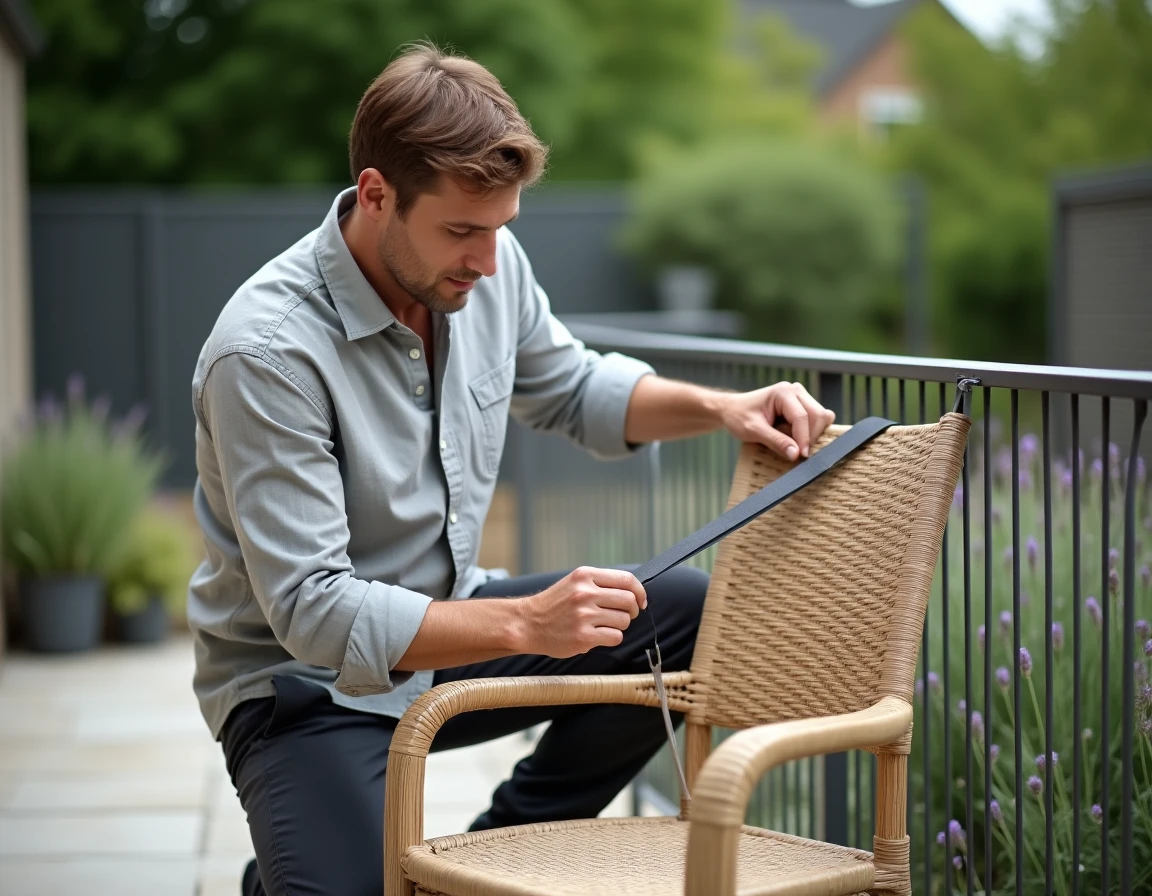
A garden lounge propelled to the other end of the terrace after a gust poses a risk of material damage, but also of harm to the neighbor. With the increase in episodes of violent winds linked to summer storms, the question of securing outdoor furniture arises for all homeowners, not just those by the sea. Understanding the forces at play and the appropriate methods allows you to keep your lounge in place without sacrificing aesthetics.
Wind Resistance and Center of Gravity: Why Garden Furniture Takes Off
Before securing anything, it’s essential to understand what causes the lift-off. The wind exerts pressure on any surface it encounters. The larger and lighter the exposed surface, the more the thrust force exceeds the weight that keeps the object on the ground.
A high-backed wicker chair offers considerable wind resistance for a modest weight. In contrast, a stone coffee table remains stable because its center of gravity is low and its mass is high. The ratio between the surface area exposed to the wind and the weight of the object determines its vulnerability.
Cushions exacerbate the problem: their bulging shape creates a lift effect similar to that of a sail. During a gust, the cushion lifts and sometimes takes the chair with it. To prevent a garden lounge from flying away, you need to act on two levers: increase the effective weight of the furniture or reduce its wind-catching surface.
Securing Terrace Furniture: Plates, Anchors, and Dowels
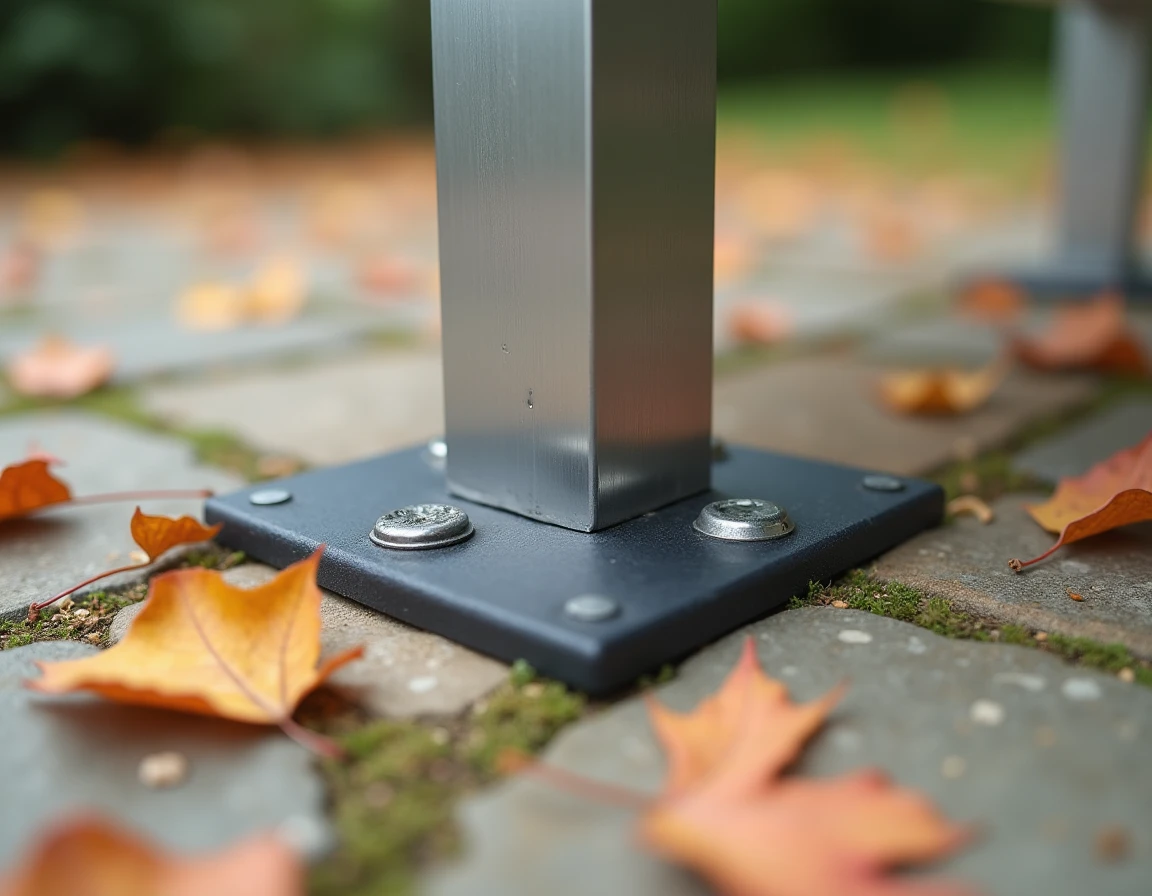
The most reliable method is to physically secure the furniture to the slab. Restoration professionals have long used metal plates anchored in concrete, screwed under the legs of tables or chairs. This system, once reserved for hotel terraces, is now available to the general public.
How to Choose Your Anchoring System
The choice depends on the type of flooring. On a concrete slab, stainless steel expansion dowels can support high tensile loads. On composite wood or decking boards, screw plates are sufficient if the underlying joists are solid.
- On concrete: stainless steel expansion dowels with L or U plates, drilled with a hammer drill, suitable for table legs and parasol bases
- On wood or composite: long wood screws passing through the decking into the joist, with a wide washer to distribute the load
- On gravel or soil: deeply driven anchoring stakes, connected to the furniture by cable or short strap
The advantage of securing with plates is its discretion. Once the furniture is in place, the system remains invisible. The main drawback: the furniture loses its mobility. Therefore, careful consideration of the layout is necessary before drilling.
Weighting the Garden Lounge: A No-Drill Alternative
Not everyone can (or wants to) drill their terrace. Weighting offers an effective intermediate solution. The principle is simple: add mass to the furniture so that the wind cannot lift it.
Weight Bags and Integrated Weights
Sand or gravel bags, slipped under the structure or attached to the legs, remain the most economical solution. For parasols, weighting bases reach very high masses in professional models. Restaurateurs commonly use bases that far exceed the weight of a standard domestic parasol base.
The limits of weighting become apparent during violent gusts. A sandbag placed on the seat of a lightweight chair will not suffice against storm winds. Weighting works well for moderate to strong winds, but not for extreme episodes. In this case, storage remains the only safe option.
Furniture Materials and Own Weight
The choice of material plays a direct role. Aluminum and resin are lightweight and therefore vulnerable. Wrought iron, treated steel, or solid wood (teak, acacia) offer natural wind resistance due to their own weight. When purchasing, prioritizing furniture whose weight is an asset rather than a drawback is already a form of prevention.
Reducing Wind Resistance: Windbreaks, Storage, and Configuration
Rather than fighting against the wind once it hits the furniture, you can limit its impact upstream. The location of the garden lounge and the vegetation layout around the terrace drastically change the situation.
A dense hedge, a slatted screen, or a low wall deflects the airflow before it reaches the furniture. The principle of a windbreak relies on partial permeability: an obstacle that allows some air to pass through (about a third of its surface) reduces wind speed more effectively than a solid wall, which creates turbulence on the other side.
- Evergreen hedge (laurel, photinia, eleagnus): natural protection all year round, effective from two meters high
- Wood or composite slatted screen: wind filtering without tunnel effect, quick installation
- Reed or windbreak fabric on an existing structure (balustrade, pergola): temporary and economical solution
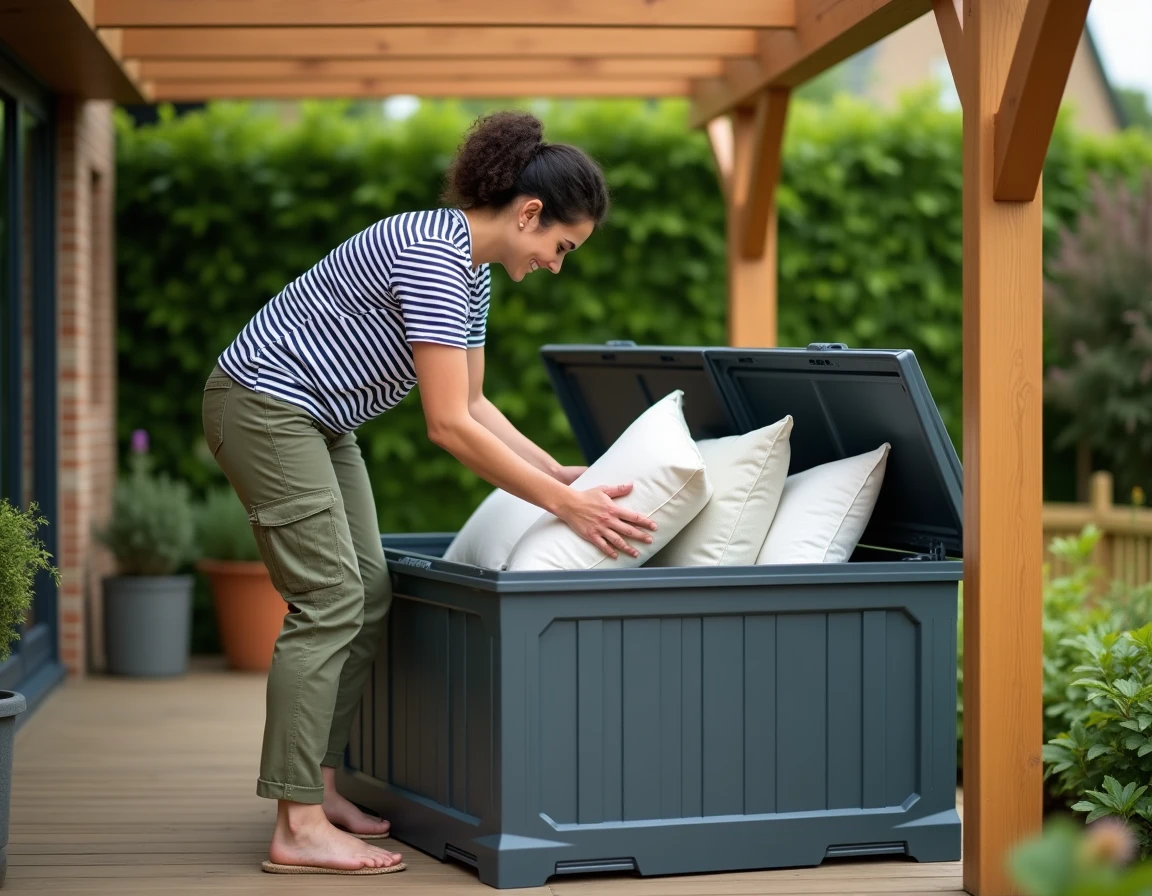
For cushions and textile elements, the best protection remains systematic storage in a waterproof box as soon as the wind picks up. Insurers also remind that the property owner’s civil liability can be engaged if an unsecured object flies away and causes damage to a third party.
Liability and Insurance: What the Wind Can Cost
Beyond broken furniture, a garden lounge thrown by a gust can damage a parked vehicle or a neighboring facade. Home insurers are handling an increasing number of claims related to garden objects carried away by the wind.
Coverage depends on the guarantees of the contract: the “climatic events” guarantee generally covers damages to the furniture itself, while the “civil liability” guarantee applies to damages caused to others. Checking these two points in your contract before the storm season avoids unpleasant surprises.
The current trend of increasing convective gusts, including outside coastal areas, makes this precaution relevant throughout France. Securing, weighting, or storing your garden furniture is no longer an optional precaution; it is a habit to adopt as soon as the first strong wind alerts from Météo-France.