
You just grilled vegetables, shrimp, and a few slices of chorizo on your enameled cast iron griddle. The plate is still smoking, stained with caramelized juices. This is precisely the moment when everything is at stake for what comes next.
Why enameled cast iron doesn’t clean like steel or stainless steel
Many guides address cleaning a griddle generically, without distinguishing between materials. Enameled cast iron, however, behaves very differently from rolled steel or solid stainless steel.
The enamel forms a vitrified layer applied over the raw cast iron. This layer protects against rust and prevents food from penetrating the metal’s pores. In return, the enamel does not tolerate hard abrasives or severe thermal shocks.
In practical terms, this means three things:
- Metal pads and steel wool should be avoided, as they scratch the vitrified surface and create points of attachment for future dirt.
- Enameled cast iron does not season like a bare steel plate. Applying protective oil between uses makes no sense here, as the enamel already serves this barrier role.
- A thermal shock that is too violent (ice water on a very hot plate) can cause micro-cracks in the enamel, initially invisible but worsening over time.
Adopting the right method for cleaning enameled cast iron griddles first relies on this distinction between materials. Once this principle is understood, the daily action becomes simple.

Hot cleaning after cooking: the action that avoids the chore
The most effective time to clean an enameled cast iron griddle is just after removing the food, while the plate is still hot. The cooking residues haven’t had time to harden and almost come off on their own.
The technique of warm water on a hot plate
Pour a glass of warm water (not cold) directly onto the surface. The steam produced lifts the stuck juices. With a wooden or rounded-edge stainless steel spatula, gently scrape the plate in one direction.
One pass with the spatula is sufficient in most cases. Then wipe with thick absorbent paper. The plate should be clean in less than two minutes.
Ice cubes: a temporary aid, not a reflex
You may have read that placing ice cubes on the griddle makes cleaning easier. The thermal shock does indeed help detach stubborn residues. On an enameled cast iron plate, this practice remains usable, but with caution.
Place the ice cubes on a small area, never on the entire surface at once. The enamel can withstand moderate temperature variations, but not extreme differences applied uniformly. Reserve this tip for particularly dirty areas, not for routine cleaning.
Stubborn stains on enameled cast iron: when standard cleaning is no longer enough
You forgot to clean after the meal, or a sweet marinade has charred on the plate. The residues are now dry and stuck. Scraping while hot no longer works. What to do without damaging the enamel?
Warmed white vinegar, ally against burnt crusts
Warm up some white vinegar and pour it directly onto the stain. Let it sit for a few minutes, then scrub with a non-abrasive sponge (soft side only). The acidity of the vinegar dissolves cooked fats without attacking the enamel.
For the most stubborn residues, mix the vinegar with baking soda. The effervescent reaction helps mechanically detach the crusts without vigorous scrubbing. Rinse with clear water afterward.
What to never use on enamel
The temptation is great to pull out a caustic product or a metal scraper when a stain resists. This is precisely what damages the plate irreversibly.
- Oven cleaners often contain caustic soda, which is aggressive towards vitrified enamel.
- Metal or abrasive fiber scrubbing sponges leave micro-scratches that dull the surface and promote food sticking during future cooking.
- Scraping with a knife or razor blade may seem effective, but it gouges the enamel and exposes the raw cast iron to oxidation.
Always prioritize patience and a gentle product over mechanical force. Soaking in vinegar for ten minutes is a better alternative to five minutes of aggressive scraping.
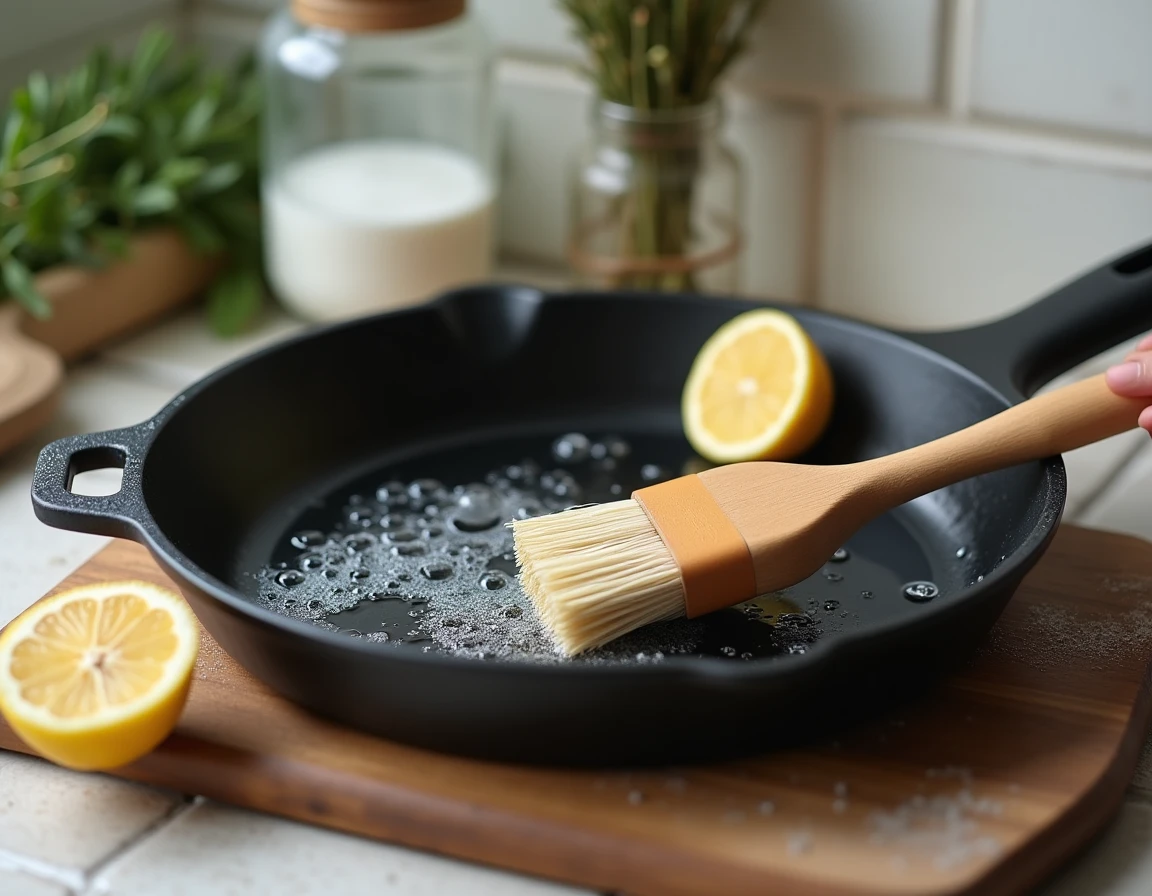
Maintenance of the enameled cast iron griddle between seasons
Cleaning after each use protects the plate daily. Seasonal maintenance preserves the quality of the enamel in the long term.
Before storing your griddle for the winter, clean the plate using the usual method, then dry it thoroughly. Residual moisture is the main enemy during prolonged storage. Even though the enamel protects the cast iron, the edges and worn areas can rust.
Apply a very thin film of cooking oil on the clean, dry surface. This creates a barrier against ambient moisture. Don’t forget to empty and clean the grease tray, which attracts insects and emits odors if left full.
When the nice days return, a simple wipe with a damp cloth and a preheating at medium temperature are enough to have a plate ready for cooking. Visually check the condition of the enamel: if you spot chips or areas where the gray cast iron appears, these points will need to be monitored as they may enlarge with heat.
A well-maintained enameled cast iron griddle retains its cooking qualities and smooth surface for many years. The most cost-effective action remains immediate hot cleaning after each meal, which takes less than two minutes and prevents any accumulation of difficult-to-treat residues later on.