Global sales of second-hand jewelry are growing twice as fast as those of new pieces, according to the latest industry studies. Several major luxury houses are reintroducing their own vintage creations into their showcases, defying the traditional market logic that favored novelty.
Behind this dynamism, the appreciation of existing items is increasingly appealing to buyers who want to limit their environmental impact. The rise of upcycling and increased traceability are profoundly transforming consumption habits in the world of jewelry and watchmaking.
Why second-hand jewelry is increasingly appealing to responsible fashion enthusiasts
Sustainable fashion is now breaking free from textiles to adorn wrists, necks, and fingers. Second-hand jewelry is establishing itself as a planet-friendly alternative, in line with the desire to consume differently. Circular fashion is expanding, driven by those who want to preserve resources and seek out extraordinary pieces. One figure stands out: 75% of French people would be willing to buy second-hand luxury products. The landscape is changing, and so are habits.
The explanation lies in the promise of originality offered by these pieces that have already stood the test of time. They are no longer just objects, but fragments of history. Slow fashion enthusiasts seek emotion, the trace of a gesture, the craftsmanship of a bygone era. A second-hand ring is never anonymous: it carries memories, a patina, a style that mass production can never replicate. For those dreaming of finding a unique piece, the second-hand market opens up an almost infinite realm of possibilities.
Embracing second-hand is also betting on a thoughtful investment. Some pieces, such as signed watches or rings, do not age: they increase in value over time. This market appeals to those who want to break free from the fast fashion routine and claim their style without sacrificing authenticity. Women aged 25 to 45, in particular, are investing in this area: they seek jewelry that reflects their image, want to give meaning to their choices, and participate in an economy that values transmission.
Here are the motivations behind this new enthusiasm:
- Environmental respect: reducing reliance on the extraction of natural resources.
- Originality and rarity: discovering unique, signed, or vintage pieces.
- Investment: some jewelry appreciates over the years.
- History: each piece carries a memory, an emotion, a time.
The second-hand ring perfectly encapsulates this evolution: it symbolizes both the imprint of the past and the desire to consume differently, without compromising on quality or aesthetics. Here, sustainable fashion takes on its full meaning.
What are the benefits for the environment, style, and wallet?
Choosing a second-hand piece is a coherent choice in the face of the excesses of mass production. Each item reintroduced into circulation, each second-hand ring adopted, spares the world from a new extraction of precious metals or stones. Just look at the numbers: for a single gram of gold, 500 liters of water must be mobilized, along with the use of mercury or cyanide. The cutting of a one-carat diamond releases 160 kilos of CO2. Second-hand allows for limiting this impact, preserving resources, and reducing pollution related to fashion.
On the style front, the advantage is clear. Second-hand is the promise of rarity. Vintage jewelry, signed creations, designer models—something never seen before. Wearing a piece that exists in only one copy is to assert an identity, to break free from trends that fade as quickly as they arrive. Here, sustainable fashion relies on history and uniqueness.
The wallet also benefits. In the second-hand market, prices challenge the competition from new items, and quality is not sacrificed. Some iconic pieces even appreciate in value over time. Take Cartier’s Trinity ring: its value has surged by 90% in three years, driven by the rising price of gold. Circular fashion no longer pits ecological awareness against elegance and financial strategy: it brings them together.
Market, authenticity, upcycling: what you need to know before diving in
The second-hand market is experiencing impressive growth, fueled by the appeal of sustainable fashion and the rejection of disposable consumption. According to Bain & Company, the sector will reach $35 billion in 2024 and could quadruple in the next ten years. Watches and jewelry already represent half of this market, a sign that the quest for unique and authentic pieces has never been stronger.
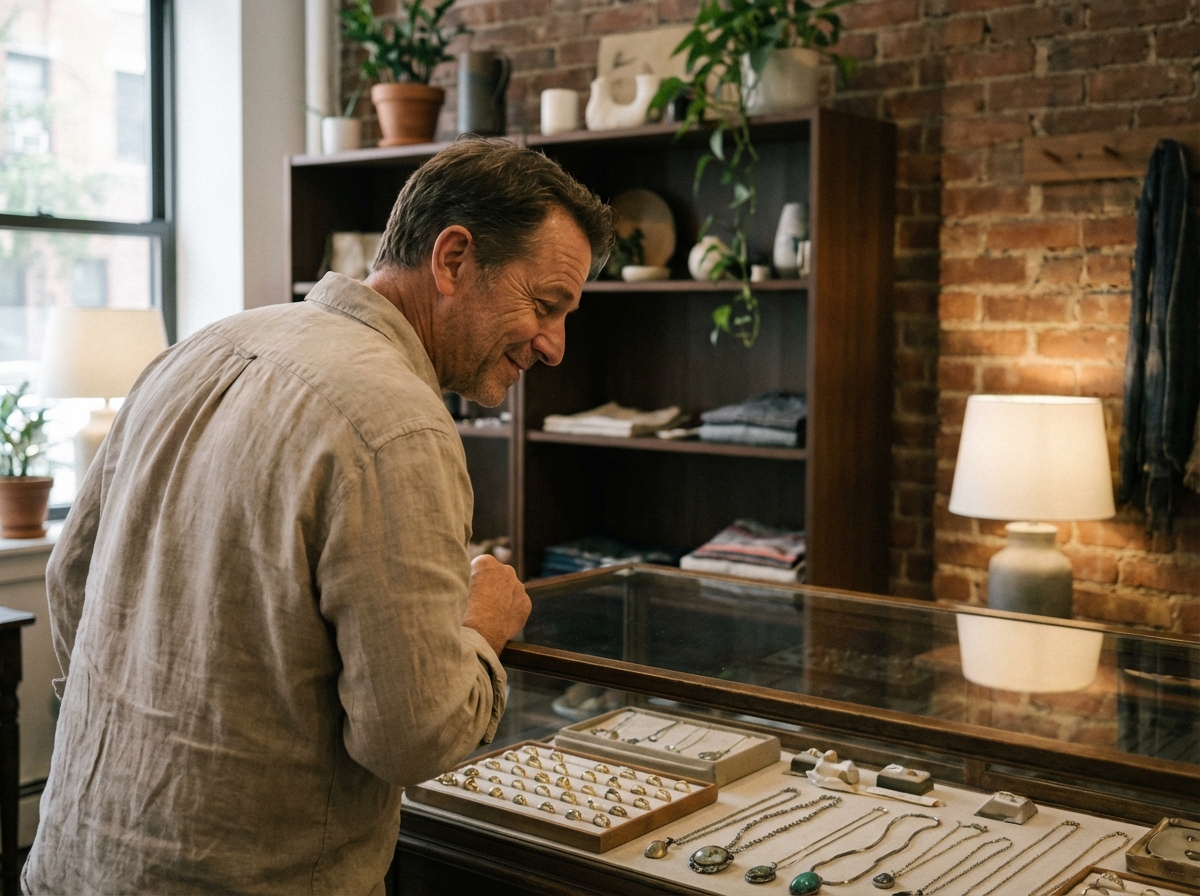
Before buying, it is important to be vigilant about provenance and authenticity. Specialized platforms and certain stores offer certificates, invoices, or expert appraisals. This traceability protects against counterfeits, reassures about quality, and allows for the appreciation of the purchase over time.
Upcycling is also redefining the rules of the game: transforming old rings, restoring luster to a forgotten piece, polishing or rhodium plating to give it new life. Each piece can thus experience a second birth, enriched with a soul.
Here are two options for buying with confidence:
- Charity thrift stores: they support social causes, create jobs, and provide direct access to authenticated and selected second-hand jewelry.
- Specialized platforms: they facilitate buying or selling, guarantee authenticity, and bring transparency to a market that has long been reserved for insiders.
Choosing second-hand jewelry means opting for items that carry history and emotion, while anchoring your purchase in a concrete logic of reuse. On each wrist, on each finger, a new page is written, far from ephemeral cycles, at the pace of a fashion that has decided to last.