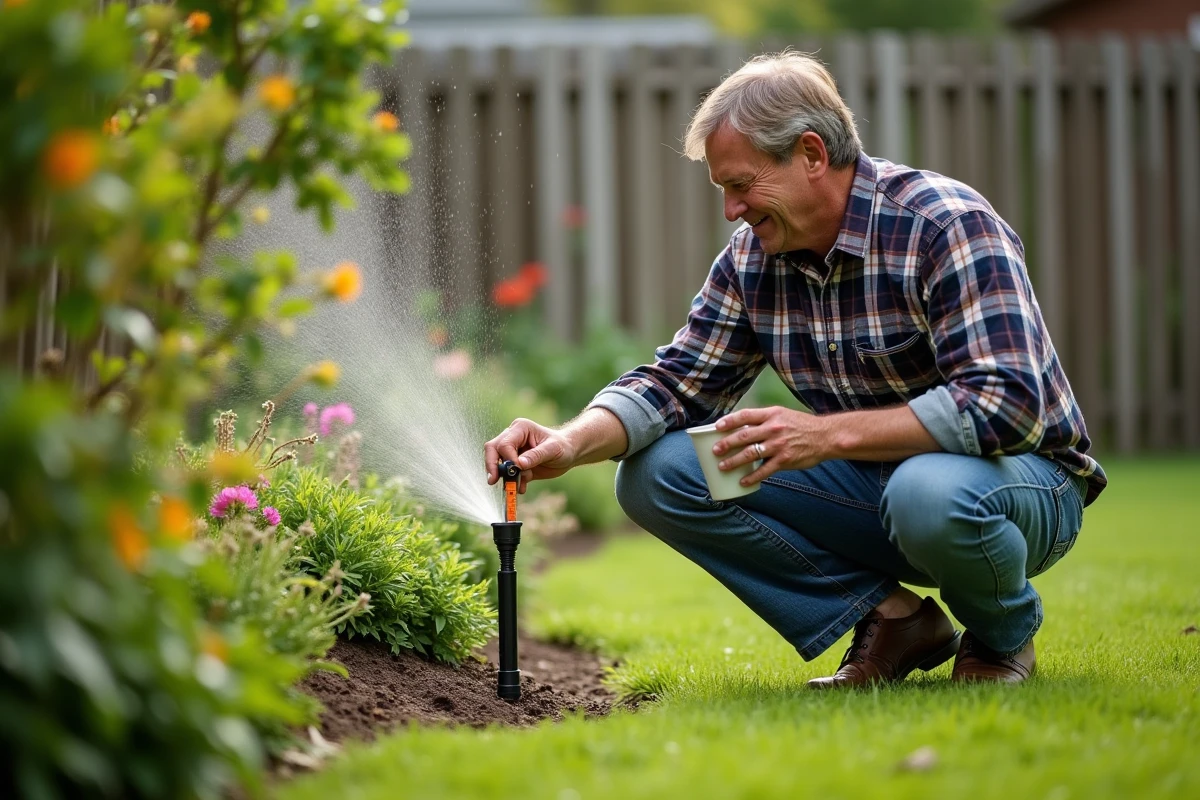
Most plants die more often from excess water than from a lack of it, while irrigation remains one of the most neglected practices in gardening. Automatic systems, often perceived as miracle solutions, do not guarantee an appropriate distribution without precise adjustments.
The question of how much water to provide is never summed up by a universal formula. It varies according to soil texture, current weather, and the type of plants in place. It’s impossible to copy-paste a rule without considering the terrain: each plot has its own requirements, and the savvy gardener adjusts their inputs to the reality of their space.
Why the amount of water provided is fundamental for the health of your garden
With every watering, the fate of the garden is at stake. Overwatering causes the soil to suffocate: roots choke, growth slows, and diseases lurk. Conversely, in the case of underwatering, drought sets in, leaves wilt, and the lawn becomes dull. Everything rests on balance: adjusting the amount based on soil texture, the area to cover, the season, and the specific needs of each plant.
On a lawn, a light watering only moistens the surface: roots remain shallow and become vulnerable to heat. For a flower bed or vegetable patch, precision is essential: density, plant growth, and substrate nature dictate the rhythm and quantity.
Don’t rely on the appearance of the soil: take a flat container, leave it in the watered area, then measure the water level. Clay soils retain moisture for a long time: space out the watering. Sandy soils, on the other hand, require more frequent watering as water drains away quickly. And if a generous downpour occurs, skip the planned cycle.
To go further in adjustment, Clic Garden’s watering tips offer concrete methods, reference tables, and tips for accurately dosing water, keeping in mind both the health of the garden and the preservation of resources.
Here are three benchmarks to adapt your inputs:
- Water for lawns: aim for 15 to 20 mm each week during dry periods.
- Flower beds and vegetable gardens: prefer split watering at the base of the plants to limit evaporation losses.
- Soil: analyze texture and retention capacity to determine watering frequency.
What criteria to consider for calculating ideal watering with an automatic or drip system?
Mastering automatic watering goes well beyond just pressing the “ON” button. Every parameter matters: area, pressure, flow rate, terrain configuration. Start by measuring the area to be irrigated: the number of square meters determines the length of pipes, the type of nozzles to install, and the power required if you opt for buried pipes.
Flow rate and pressure are the two real levers to ensure uniform distribution. A flow rate that’s too low means water won’t cover the entire area; too high, and you risk saturation and waste. To measure the available flow rate, nothing could be simpler: place a 10-liter bucket under the tap, time it. The time obtained allows you to adjust your system settings, whether it’s a drip system or a traditional sprinkler.
Then adjust the volume delivered to the nature of the garden: lawns, shrubs, and vegetable gardens have different needs. A well-adjusted dripper delivers between 2 and 4 liters/hour. For a dense flower bed, distribute the drippers to cover each area, without excess or omission.
Here are the reflexes to adopt for sizing your system:
- Test the available pressure: aim for between 1 and 3 bars for optimal operation.
- Calculate the total amount to be delivered based on the area and measured flow rate.
- Adjust the programming according to the soil’s capacity to retain water and the weather forecast for the coming days.
By correctly configuring your system, you limit waste, make the garden more resilient to climatic fluctuations, while saving water.
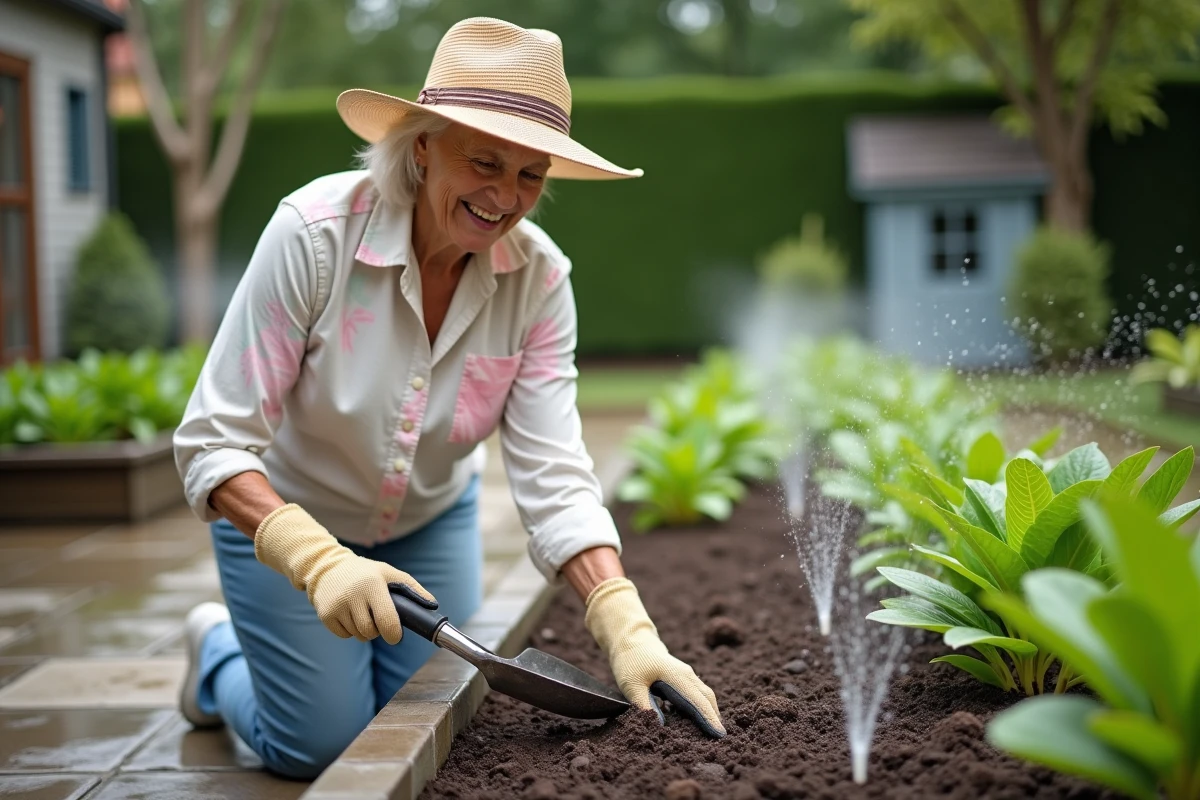
Choosing the right irrigation system: practical tips for combining efficiency and water savings
The choice of irrigation system directly influences the health of the garden, as well as your water consumption. For large areas, the oscillating sprinkler is essential: it remains the most effective for maintaining a large lawn, provided you monitor the wind to avoid unnecessary losses. As soon as the configuration becomes more complex or you want to closely target the needs of the plants, opt for drip irrigation. This system irrigates each plant precisely, reduces waste through evaporation, and simplifies maintenance.
The selected equipment must adapt to the available pressure, total area, and diversity of your plantings. Installing a timer allows you to schedule watering cycles during the cooler parts of the day, adjust frequency according to the seasons, and respond quickly to rainy episodes.
To optimize each installation, keep these rules in mind:
- Select specific solutions according to the area: lawns, vegetable gardens, and hedges do not require the same approach.
- Use suitable pipes and adjustable nozzles to adjust the amount of water delivered to each sector.
- Split watering into several short cycles: this promotes water penetration and limits runoff.
Watering is no longer a matter of chance. By observing your garden, considering its needs, and choosing flexible equipment, you find the formula that guarantees both vitality, robustness… and water efficiency. At the end of the hose, it’s the entire balance of the garden that is at stake. Who knows? Next season, it might be your lawn that makes the neighbors envious.