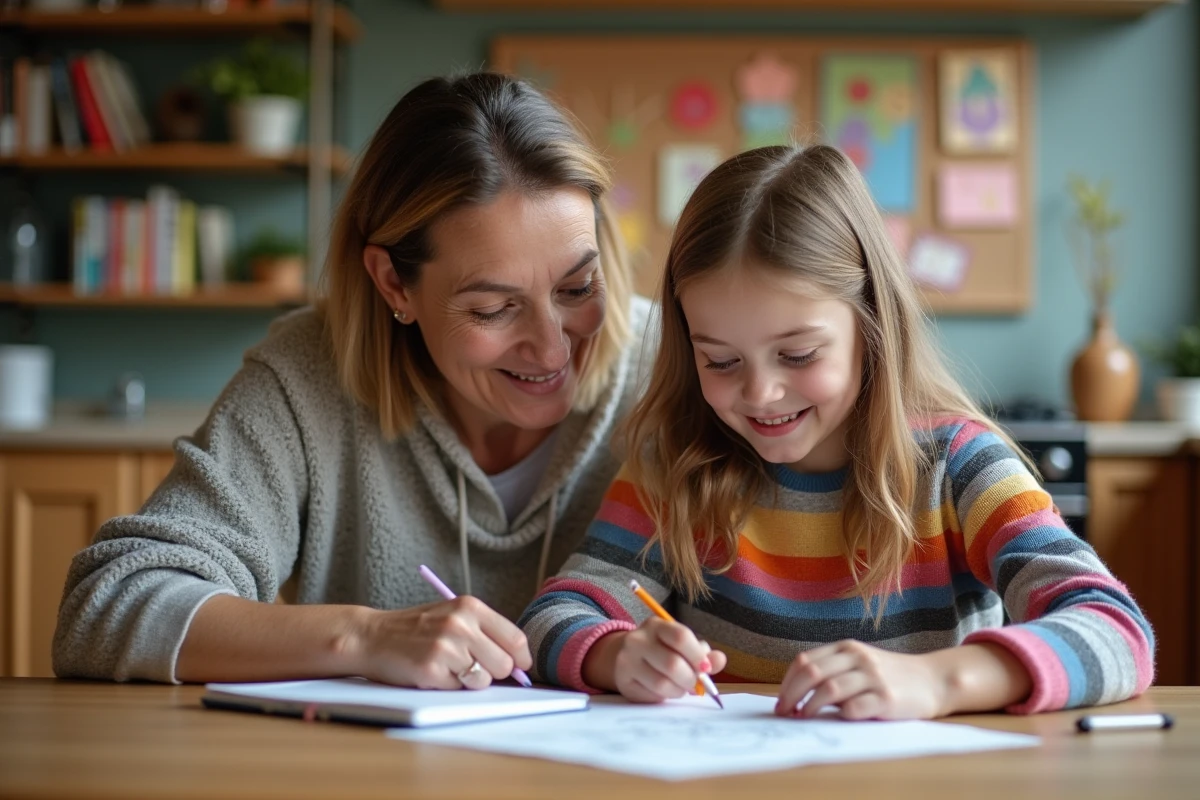
Setting aside the norm is sometimes the best way to find one’s path. The numbers are clear: academic success is also written in the margins, where the voice of parents provides support, not surveillance. Too much guidance stifles initiative; too little leaves the child wandering without reference points. It is neither the time spent supervising exercises nor the multiplication of corrections that fosters motivation. It is the words exchanged around a table, the sincere encouragements, and the quality of the relationship that, day after day, build trust and the desire to learn. Studies hardly vary on one point: recognizing the journey made, congratulating effort more than the report card, gives the child the taste to continue, even in difficulty. However, for many families, accessing concrete advice still feels like an obstacle course. In the face of this gap, there are tangible, accessible solutions to help parents support their children and allow them to grow with confidence.
Understanding the keys to effective parental support for academic success
Supporting parents in the education of their children is above all about considering the diversity of life stories. Everyone moves forward with their strengths, weaknesses, and experiences. Forget the universal recipe: success relies on a delicate balance between presence, listening, and the space given to each child to grow at their own pace. Recent studies demonstrate this: the trust built over time weighs more than the pressure of grades or constant homework supervision.
This conducive climate is established in daily life through simple gestures: establishing reassuring routines, respecting the child’s tempo, paying attention to every effort, no matter how modest. Autonomy does not flourish under comparison or competition, but in an atmosphere of encouragement and patience. These details, accumulated day after day, form the fabric on which the desire to learn, motivation, and the pleasure of discovery rely.
For families seeking reference points, the Parents Ensemble website offers concrete resources designed for the sometimes complex realities of daily life. Everyone can find ways to better understand the child’s needs, adjust expectations, and support the academic journey without generating unnecessary anxiety.
Here are some key areas around which truly beneficial support is structured:
- Active listening: opening the space for speech, allowing the child to express their feelings, supporting without judgment.
- Valuation: highlighting progress, even if minimal, rather than only focusing on the final result.
- Flexible guidance: setting clear reference points while allowing room for personal initiatives.
This daily work builds real continuity. The goal is not to control everything but to structure a reassuring presence that allows the child to feel supported, to dare, to take responsibility for their choices, and to gradually become an actor in their learning.
How does positive education transform daily learning?
Forgetting punishment in favor of dialogue is the bet of positive education. Here, the mistake is no longer a failure to be hastily corrected, but an opportunity to move forward. This approach makes a clear difference: the child feels understood, listened to, and encouraged to explore rather than flee from difficulty. Numerous studies in educational psychology confirm this: valuing effort and welcoming emotions open unexpected paths to autonomy.
Days fly by, schedules overflow, but a few gestures have a real impact. Acknowledging the efforts made, setting limits without harshness, putting words to tensions, and encouraging cooperation… These small attentions defuse many crises and establish a calm climate where the child finds their space to express themselves.
Several supportive habits can easily be identified to anchor positive education in daily life:
- Opt for constructive speech: describe the context without judging, verbalize emotions, open avenues for resolution.
- Encourage autonomy: allow the child to take initiatives, even modest ones, and recognize their progress.
- Work together: welcome differences, exchange solutions, co-construct the rules of living together.
Gradually, this relational mode transforms the family dynamic. Trust settles in, dialogue deepens, and everyone gains serenity. Learning becomes a source of shared curiosity, adapted to each temperament and each story.

Concrete resources to support your children and cultivate their development
Advancing in education also means relying on tools adapted to the realities on the ground. Books, specialized podcasts, workshops, and digital resources form a pool of resources, but not all have the same value. Selecting reliable guides, relevant practical sheets, or materials based on solid recommendations allows for informed support at every stage of the child’s development.
Promoting autonomy and family well-being
Here are several reflexes to cultivate to promote autonomy and family harmony:
- Establish shared and consistent rules to create a structuring and reassuring framework.
- Take into account each person’s biological rhythm: sleep is an underestimated ally that conditions attention, mood, and availability.
- Whenever possible, offer the child the opportunity to test, experiment, and sometimes fail, to affirm their personality and grow in confidence.
The parent-child relationship is woven in simple moments: an evening ritual, an unexpected conversation at the table, or the discovery of a shared passion. Social networks can become valuable places for sharing, provided one navigates them with clarity. Support groups and exchanges between parents enlighten, reassure, and change many perspectives. Taking care of this dynamic is preparing for the future. Here, there is no miracle solution, but a multitude of small steps that shape each family journey. And tomorrow, what will these seeds of trust and curiosity planted today offer?