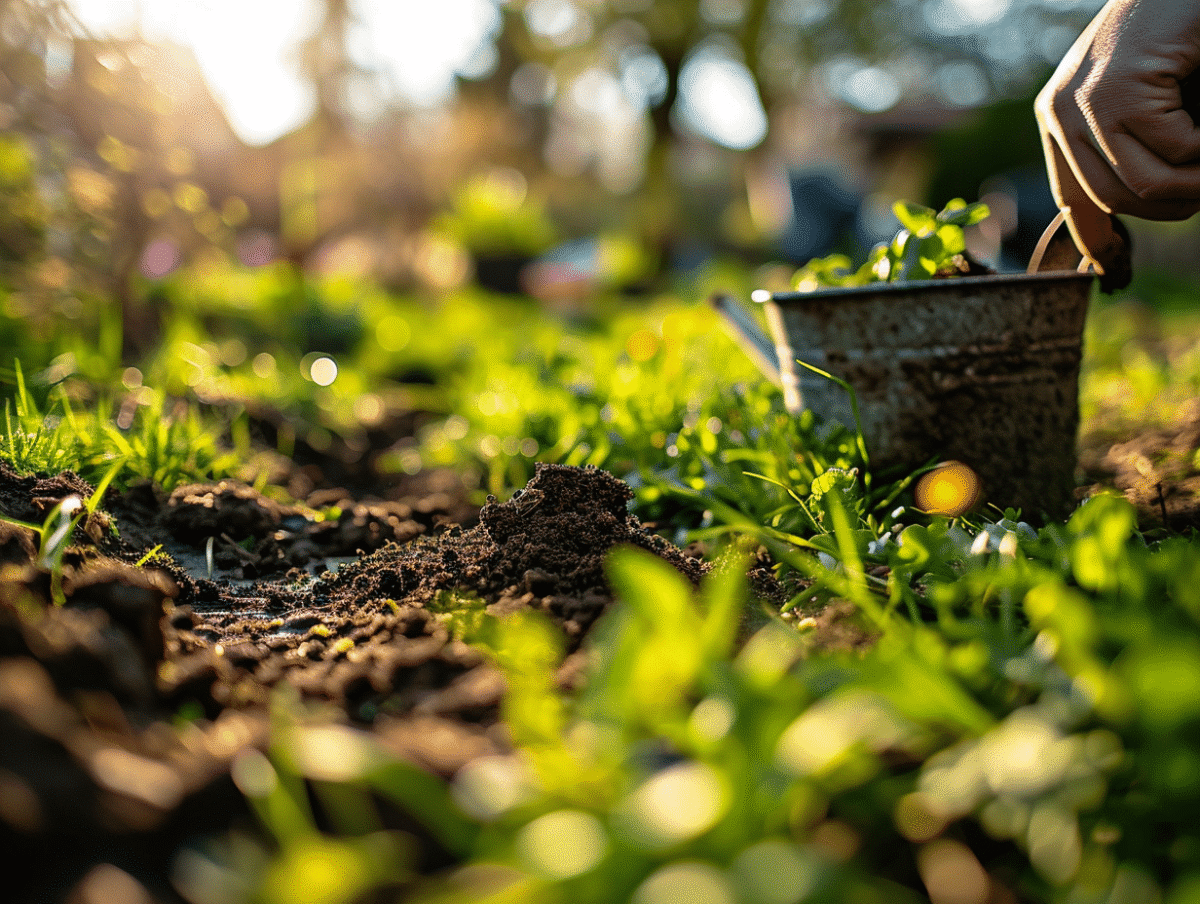
Over time, the once lush and uniform lawn in your garden may become dotted with bare patches, real sore spots for any greenery enthusiast. These imperfections are often the result of climatic stress, disease, insect damage, or simply everyday life. Fortunately, restoring the splendor of a green carpet is within everyone’s reach thanks to a simple and proven method. This process does not necessarily require the intervention of a professional and can transform a sparse area into a dense and vigorous lawn.
Key steps to repair bare patches in your lawn
First, identify the bare patches that detract from the aesthetic of your lawn. This visual recognition is the prelude to targeted intervention. Once these areas are located, prepare the ground through scarification, thus removing the layer of thatch and other plant debris that hinders the proper growth of new grass. This often-neglected step is crucial for facilitating the penetration of water, air, and nutrients.
The choice of seeds should be adapted to the climatic conditions of your region and the quality of your soil. Consult specialized sources such as tondeuse-thermique.info to determine the most resilient and suitable species. Once this choice is made, proceed with sowing by spreading the seeds evenly over the previously prepared areas. Then cover the sowing with a thin layer of potting soil, a growing medium that promotes germination.
For repairs requiring a quick solution, consider using pre-grown sod. These rolls provide immediate and aesthetic coverage of bare areas. However, they require similar soil preparation to ensure successful integration with the rest of your lawn. Amending the soil with organic products, such as Vivimus® Pelouse DCM, can greatly improve soil quality and consequently, the success of reseeding your lawn.

Maintaining a dense and green lawn: post-repair maintenance tips
After reseeding, an appropriate maintenance program is essential to preserve the vigor of your lawn. Regular mowing is not just an aesthetic gesture; it also stimulates grass densification, promoting a dense and uniform lawn. The blades of your mower should be sharpened to ensure a clean cut and prevent diseases. Adjust the cutting height to an optimal level for the type of grass grown, usually between 3 and 4 cm.
Watering should be adjusted according to the specific needs of your lawn, favoring less frequent but deeper watering to encourage root development. Soil aeration, on the other hand, improves air and water circulation, which is essential after the compaction caused by repair work. Use a soil aerator to perforate the ground and facilitate root access to the resources necessary for their growth.
Fertilization plays a pivotal role in the health of your lawn. Natural fertilizers provide a nutritional balance without the risk of chemical burn. During the season, a quarterly application is recommended to maintain a level of fertility conducive to a lush lawn. The fight against weeds, diseases, and pests should not be overlooked. Use selective herbicides and environmentally friendly phytosanitary treatments if necessary to protect your lawn without harming your garden’s ecosystem.