
French motorway service areas have sanitary facilities whose existence remains unclear for many drivers. Between showers reserved for truck drivers, those accessible to everyone, and those temporarily closed for maintenance, the landscape is more fragmented than it seems. Knowing where to shower on the motorway, under what conditions, and at what cost can significantly change the quality of a long journey, whether traveling by van, car, or motorhome.
Access to truck showers: a gradual opening to other travelers
For a long time, the shower cabins installed at service areas were reserved for truck drivers. This separation made sense: transporters fund part of the infrastructure through their fuel purchases and regulated break times.
Since 2022, the trend has reversed. Many rest areas that previously displayed showers reserved for trucks are now opening them to other road users. The reason lies as much in the profitability of the facilities as in the changing profiles of travelers: vanlifers, families on road trips, long-distance motorcyclists.
To accurately identify showers at motorway service areas that accept all profiles, the most reliable method remains to consult the websites of motorway operators before departure. Vinci Autoroutes, for example, displays the presence of showers, their hourly accessibility, and their conditions (free access, via code, reserved for truck drivers) for each area.
Field feedback varies on this point: some areas advertise open access on their website but maintain filtering on-site, especially during peak hours for transporters. Checking in advance does not exempt one from asking for confirmation at the service desk.
Showers at motorway service areas: practical usage conditions
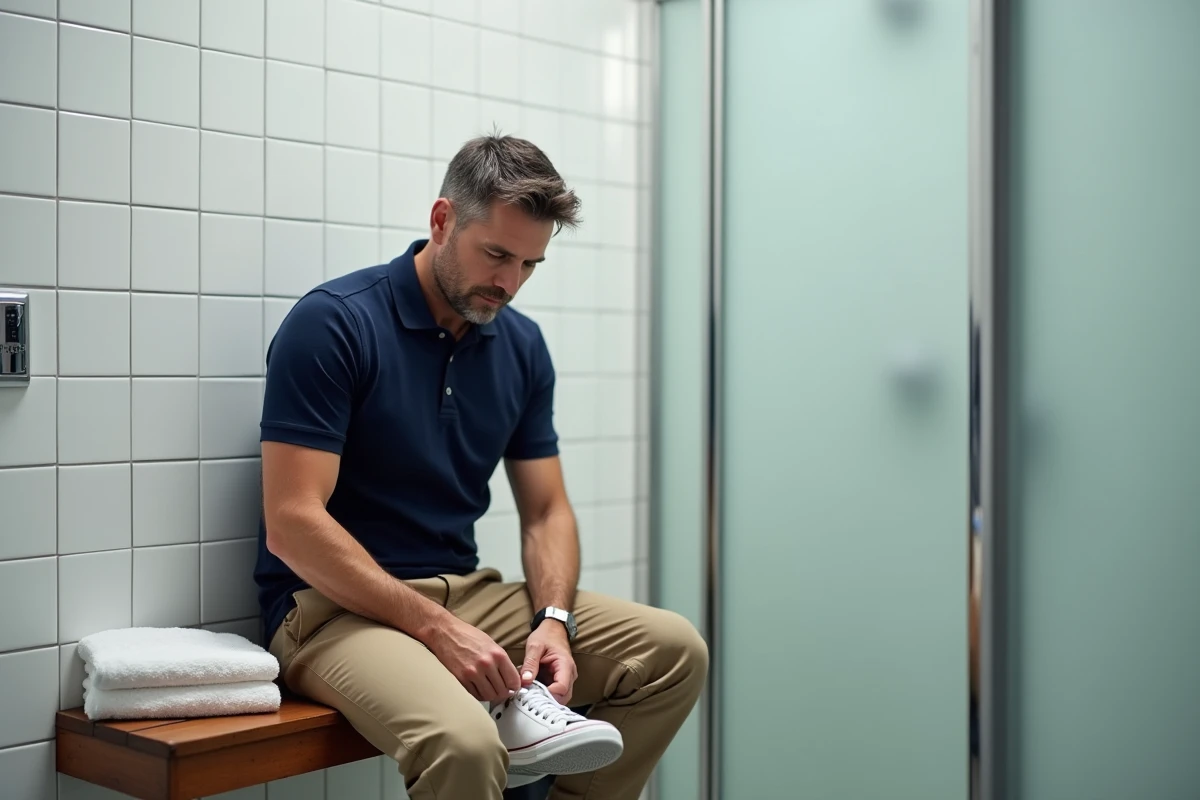
Accessing a shower on the motorway does not work like in a campsite or gym. Several parameters vary from one area to another, and ignoring them can turn a hygiene break into a waste of time.
Access modes and pricing
Three systems coexist on the French motorway network:
- Free access, without code or payment, at certain rest areas equipped with complete sanitary facilities. These installations remain rare, and their maintenance varies greatly.
- Access via code or token, issued at the service desk, sometimes conditioned on a minimum purchase of fuel or food. This model is developing at areas managed by large service groups.
- Direct paid access, with a price displayed at the entrance of the cabin. Payment is generally made by card or cash via a machine.
Hours and actual availability
Showers are not continuously accessible at all areas. Some close at night, while others are unavailable during cleaning or maintenance phases. Vinci Autoroutes began updating online in 2023 about temporary closures related to work, allowing real-time verification of whether the shower will be usable.
Apps like Park4Night also compile user feedback on the condition and availability of showers, but this data depends on the date of the last reported visit. An area marked “functional shower” six months ago may have changed configuration since then.
Hygiene on the motorway and road safety: an underestimated link
Several motorway networks have integrated the issue of driver hygiene into their drowsiness prevention programs. The “real break with a shower” is now presented as a recovery factor on par with sleep or coffee, in safety campaigns broadcast on dynamic information panels.
APRR/AREA and Vinci Autoroutes have conducted specific campaigns on this theme between 2022 and 2024. The idea is based on a simple observation: a cold or lukewarm shower after several hours of driving revives alertness more sustainably than a quick coffee.
This approach also changes how service areas are designed. New installations tend to bring shower spaces closer to rest and dining areas, to encourage more complete breaks rather than just a fuel stop.
Alternatives to motorway service area showers for van trips
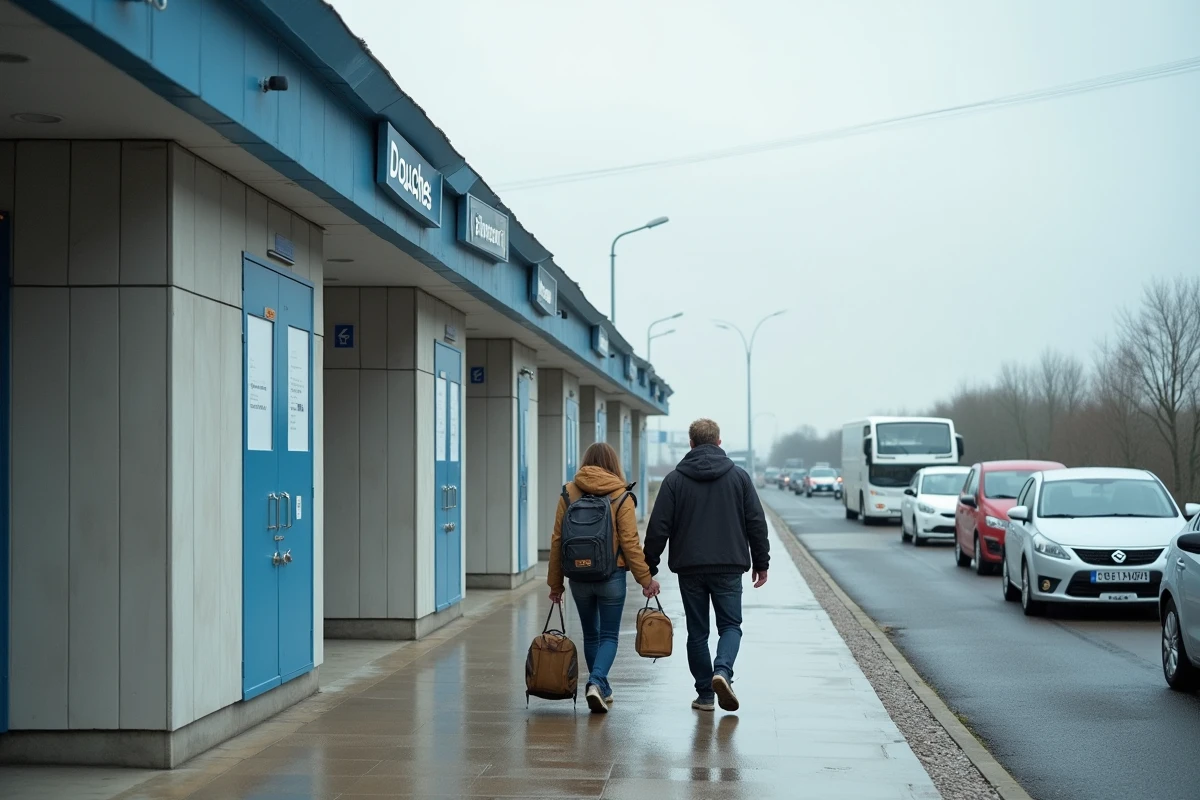
When the nearest area does not have a shower or when it is out of service, other solutions exist along the road. Their relevance depends on the type of vehicle, the season, and the time available.
- Portable solar showers represent the most autonomous option for van or camper travelers. A bag filled with water and exposed to the sun for a few hours provides a lukewarm shower without any connections. The constraint: they depend on sunlight and the volume of water carried.
- Municipal campgrounds sometimes accept non-residents for access to sanitary facilities, for a modest fee. This option works especially in the low season when facilities are not crowded.
- Municipal swimming pools near motorway exits offer showers and changing rooms. The detour lengthens the journey but guarantees clean and heated facilities.
- The cat wash, with wipes and water in a jug, remains the universal backup solution. It does not replace a real shower but allows one to hold on between two equipped stops.
Planning shower stops in advance avoids relying on a single area. Cross-referencing information from operator websites with feedback from community apps provides a more realistic view of what will be available on the day of departure.
The network of showers on the motorway is evolving, driven by the diversification of users and road safety policies. Online information is becoming more precise, but the actual condition of a facility can only be confirmed upon arrival. Having a backup solution remains the best guarantee of traveling clean, regardless of the chosen route.