
In a globalized world, weight unit conversion is a fundamental daily tool for professionals across various sectors, from logistics to nutrition, and international trade. Although the metric system is widely adopted, the United States, for example, still largely uses pounds. Mastering the conversion between pounds and kilograms is therefore essential to facilitate trade, scientific exchanges, and even culinary practices. Having a reliable and simple method to switch from one unit to another saves time and reduces potential errors.
Mastering Weight Conversions: From Pounds to Kilograms
Converting pounds to kilograms requires entering the appropriate conversion factor. To do this, remember that one pound in kg is equivalent to dividing the number of pounds by 2.2046. This simple yet fundamental mathematical operation ensures an accurate correspondence between the units of the imperial system and those of the metric system.
In a professional context, weight conversion is not an abstract exercise but a practical necessity. Whether in the pharmaceutical sector, where dosage precision can affect health, or in the food industry, where weight standardization ensures product quality, performing an accurate conversion is an unavoidable responsibility.
The use of the conversion factor is also essential in scientific research and international trade, where even the slightest inaccuracy can lead to economic consequences or significant calculation errors. Consider that accurately converting kilograms to pounds and vice versa, by multiplying by 2.2046, is not just a matter of convenience but of methodological rigor and public safety.
Choosing and Using Weight Conversion Tools Effectively
Find, among the plethora of conversion tools available, those that precisely match your needs. The conversion chart, a static and often printable document, provides a quick overview of the equivalences between weight units. Use it as a quick reference, especially when Internet connectivity is lacking or when simplicity takes precedence over digital complexity.
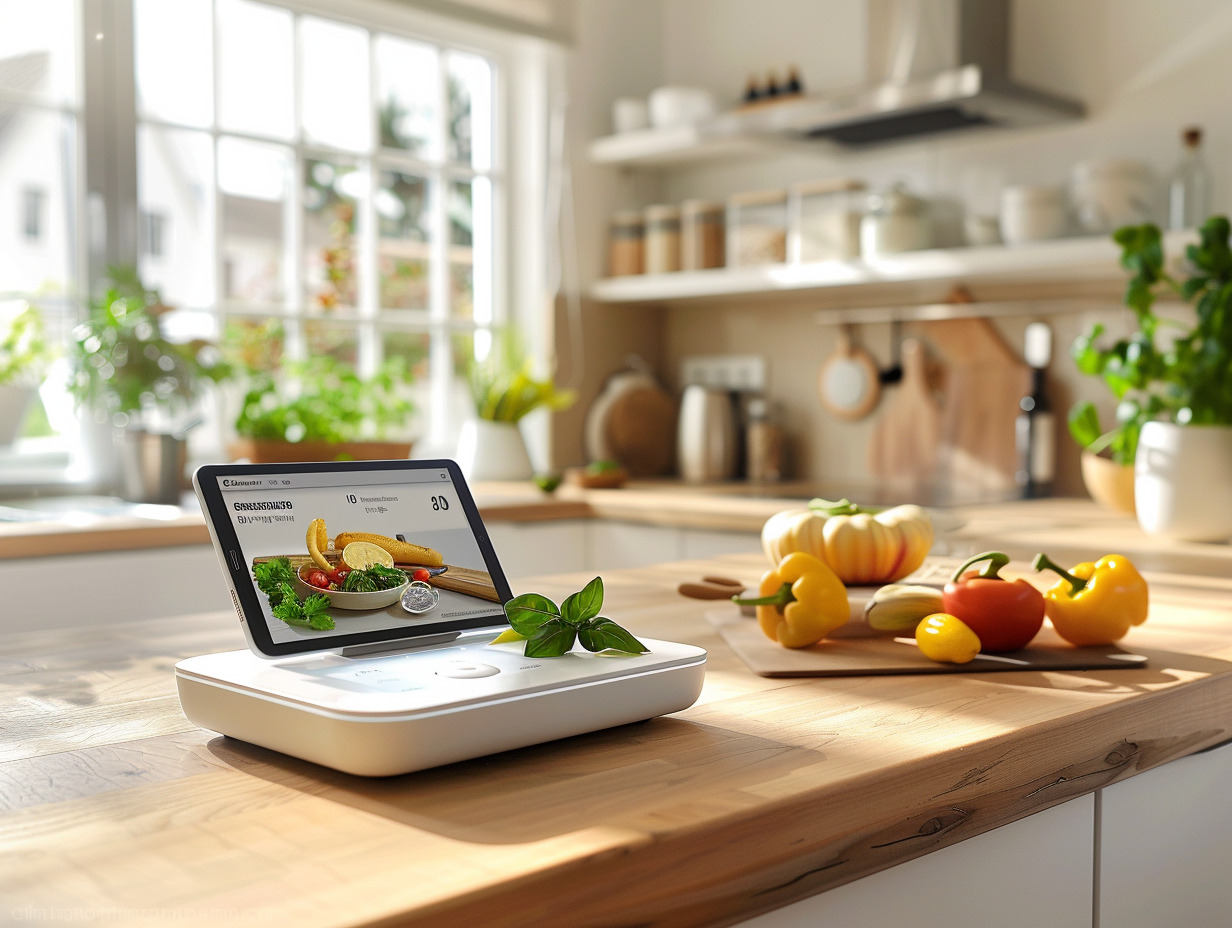
In the relentless flow of the digital age, digital conversion tools emerge as infallible allies. Smartphone applications and dedicated websites offer a capability to convert units with speed and precision tailored to contemporary demands. These tools, often equipped with intuitive interfaces, allow for effortless dimensional analysis, adapting to a variety of sectors, from pharmacy to food industry, and even construction.
Within the provinces of Canada, where both the metric system and the imperial system coexist, the need to use conversion factors is keenly felt. Choosing an appropriate tool is therefore fundamental to ensure accurate conversion and avoid errors that could lead to legal or safety consequences.
The conversion guide stands as a complementary resource, providing not only information but also methods to refine conversion practice. This type of guide is useful for those who require a deeper understanding, such as professionals facing complex conversion tasks or situations where weight measurement must be impeccably accurate.